

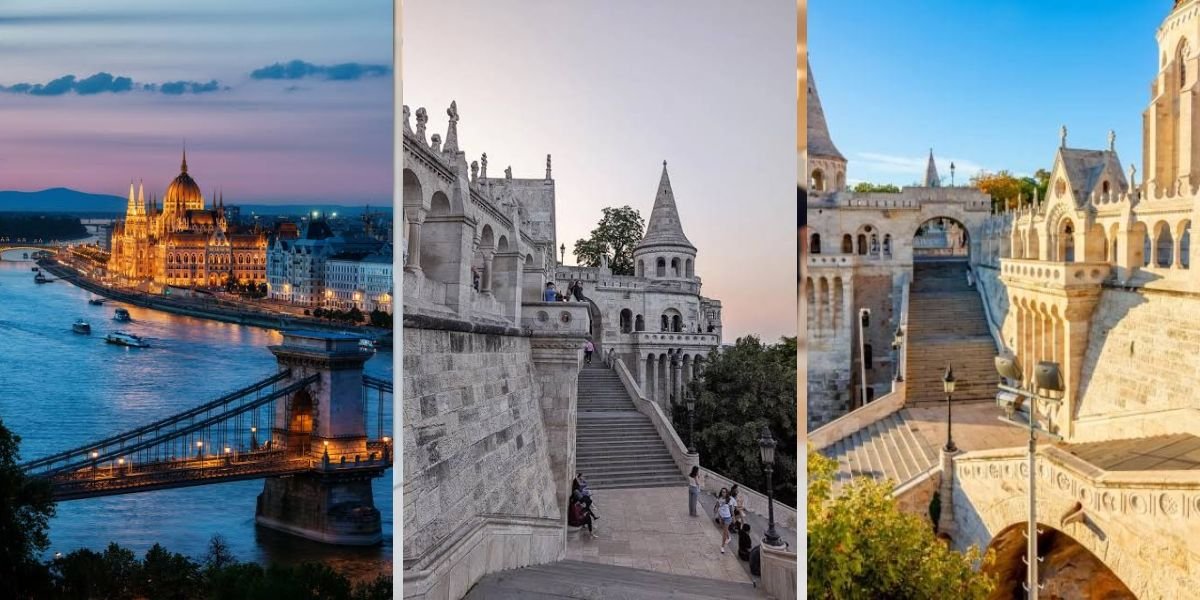
Travel to Budapest Hungary and discover a city known for grand architecture, historic landmarks, relaxing thermal baths, beautiful river views, and flavorful Hungarian cuisine. Divided by the Danube River into Buda and Pest, Budapest combines centuries of history with a lively modern atmosphere.
The Hungarian capital is one of Central Europe’s most interesting city-break destinations. You can explore Buda Castle in the morning, admire the Hungarian Parliament Building from the riverbank, relax in a thermal bath during the afternoon, and enjoy traditional Hungarian food in the evening.
Budapest is also relatively easy to explore. An extensive public transportation network connects the city’s main neighborhoods, while many attractions in the historic center can be reached on foot.
Whether you are planning a weekend getaway, a longer European vacation, or a trip through Central Europe, this Budapest Hungary travel guide covers the best places to visit, things to do, local food, transportation, where to stay, and practical travel tips.
Why Travel to Budapest Hungary?
Budapest offers a combination of history, architecture, culture, food, and relaxation that makes it suitable for many different types of travelers.
The city is famous for its historic thermal baths, including Széchenyi Thermal Bath and Gellért Bath. The Danube River divides the city and creates some of its most memorable views, especially around the Hungarian Parliament Building and Chain Bridge.
Budapest also has a fascinating history reflected in its churches, castles, monuments, museums, and historic neighborhoods.
For travelers who enjoy food, Hungarian cuisine provides plenty of options, from hearty goulash to chimney cake and traditional pastries.
Another advantage is the city’s public transportation system. Metro lines, trams, buses, and boats make it relatively straightforward to move around without renting a car.
Best Places to Visit in Budapest
Budapest has attractions spread across both sides of the Danube. Planning your itinerary around nearby landmarks can help you explore more efficiently.
Hungarian Parliament Building
The Hungarian Parliament Building is one of Budapest’s most recognizable landmarks.
Located beside the Danube in Pest, the building is famous for its grand Gothic Revival architecture, symmetrical design, and riverside setting.
The exterior is particularly impressive when viewed from across the river in Buda.
Visitors can also take guided tours of parts of the Parliament Building. If you want to visit the interior, check current official visitor information and ticket availability before your trip.
For photography, the riverfront around Buda provides excellent views of the building, particularly around sunrise and sunset.
Buda Castle
Buda Castle sits on Castle Hill overlooking the Danube and Pest.
The historic castle district contains museums, courtyards, historic streets, and viewpoints overlooking Budapest.
Walking around Castle Hill is one of the best things to do in Budapest because the area combines history with panoramic city views.
You can reach the hill using public transportation, on foot, or by other available access options depending on current operating conditions.
Fisherman’s Bastion
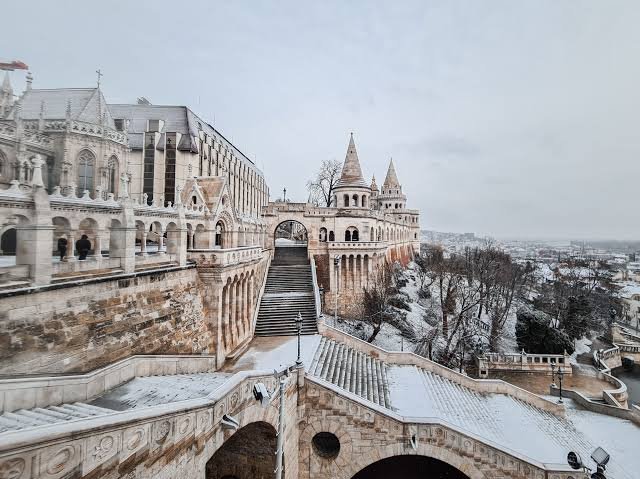
Fisherman’s Bastion is one of Budapest’s most photographed attractions.
Its distinctive towers and terraces provide panoramic views across the Danube toward the Hungarian Parliament Building and Pest.
The architecture looks almost like a fairytale castle, making it particularly popular with photographers and visitors.
Try visiting early in the morning if you want a quieter experience. Evening can also be beautiful when the city lights begin to appear.
Matthias Church
Located within the Buda Castle District, Matthias Church is an important historic and architectural landmark.
The church is known for its colorful roof tiles, detailed interior, and long history.
It stands near Fisherman’s Bastion, so the two attractions can easily be visited together.
Allow some time to explore the surrounding streets of the Castle District rather than rushing from one landmark to another.
Chain Bridge
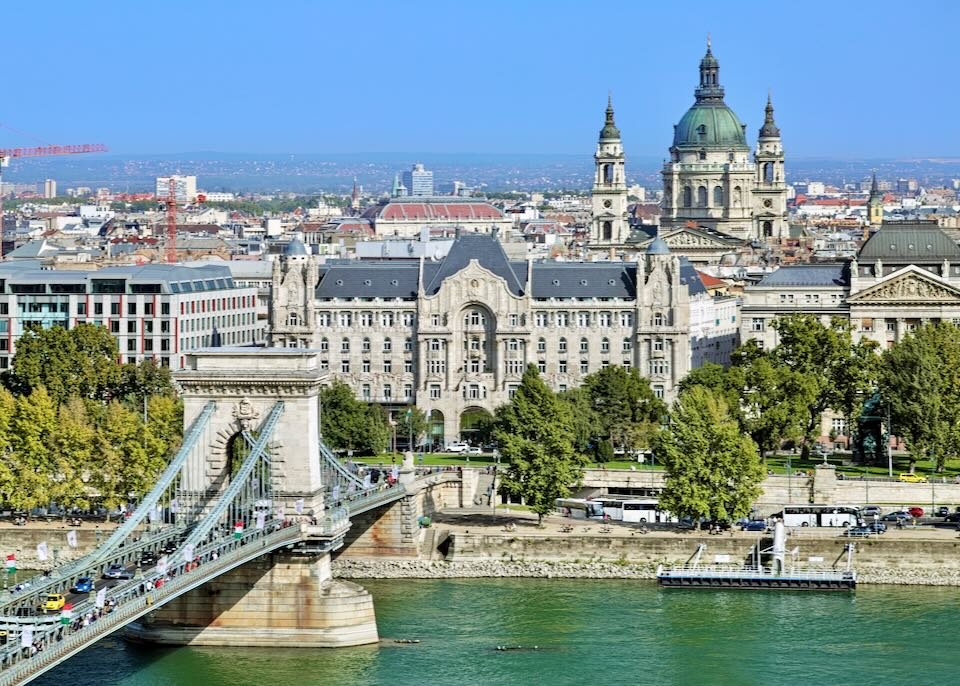
The Széchenyi Chain Bridge is one of Budapest’s most famous bridges.
It connects Buda and Pest across the Danube and has become an important symbol of the city.
Walking across the bridge offers views of the river, Buda Castle, and the surrounding cityscape.
The bridge is particularly attractive after dark when Budapest’s historic buildings and riverside landmarks are illuminated.
St. Stephen’s Basilica
St. Stephen’s Basilica is one of the most important churches in Budapest.
The impressive building stands in a central part of Pest and features a large dome and ornate interior.
Visitors can also access a viewing area depending on current opening arrangements, providing views across the city.
The area surrounding the basilica is filled with cafés and restaurants, making it a convenient place to stop for a meal or coffee.
Heroes’ Square
Heroes’ Square is a large public square located near City Park.
The square features a monumental colonnade and statues representing important figures from Hungarian history.
It is part of a larger area containing several attractions, including museums and City Park.
Because of its location, you can combine Heroes’ Square with a visit to Széchenyi Thermal Bath and other nearby sights.
City Park
City Park, known as Városliget, is one of Budapest’s major green spaces.
It offers walking paths, open areas, cultural attractions, and places to relax.
The park is home to Széchenyi Thermal Bath and is close to Heroes’ Square.
If you want a break from Budapest’s busy streets, spending a few hours in City Park can be a pleasant addition to your itinerary.
Best Thermal Baths in Budapest
Budapest is often called a city of thermal baths because of its long tradition of thermal-water bathing.
Széchenyi Thermal Bath
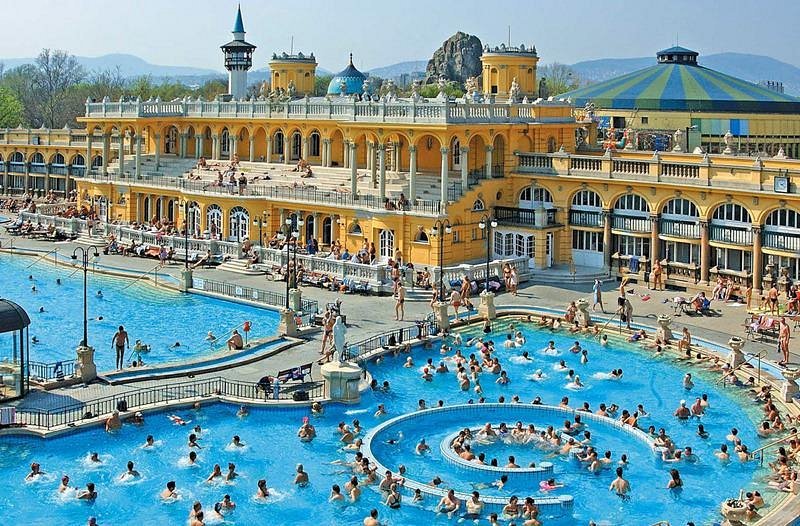
Széchenyi Thermal Bath is one of Budapest’s most famous bathing complexes.
Located in City Park, it is known for its large outdoor pools and distinctive yellow buildings.
The experience is particularly memorable during cooler weather when the warm thermal water contrasts with the surrounding air.
If visiting during a busy period, check opening hours, ticket options, and current visitor information before your visit.
Gellért Thermal Bath
Gellért Thermal Bath is another historic bathing complex in Budapest.
It is associated with the Gellért Hotel and is known for its beautiful Art Nouveau architecture.
The interior design adds another dimension to the bathing experience, making it interesting for travelers who appreciate historic buildings as well as thermal pools.
Things to Do in Budapest
Budapest offers plenty of activities beyond visiting famous landmarks.
Take a Danube River Cruise
A Danube River cruise is one of the most popular ways to see Budapest from a different perspective.
From the water, you can admire landmarks including the Parliament Building, Buda Castle, Chain Bridge, and riverside architecture.
An evening cruise can be especially attractive because many buildings are illuminated after dark.
Different cruise options are available, ranging from short sightseeing trips to longer experiences that include meals or drinks.
Walk Along the Danube
You do not necessarily need a cruise to enjoy the Danube.
Walking along the river provides excellent views and connects several important parts of the city.
The Pest-side riverfront offers views toward Buda Castle, while other sections provide perspectives of the Parliament Building and bridges.
Explore the Great Market Hall
The Great Market Hall is a popular place to experience local food and shopping.
Inside, you can find Hungarian ingredients, paprika, traditional products, souvenirs, and food stalls.
It is a useful place to learn more about Hungarian cuisine and pick up edible souvenirs.
Visit the Central Budapest Neighborhoods
Take time to explore Budapest beyond its famous landmarks.
Districts in central Pest offer cafés, restaurants, shops, historic buildings, and nightlife.
The Jewish Quarter is particularly known for its restaurants, bars, cultural spaces, and distinctive atmosphere.
Enjoy Budapest at Night
Budapest looks very different after sunset.
The Parliament Building, Chain Bridge, Buda Castle, and other landmarks are illuminated, creating beautiful nighttime scenery.
A walk along the Danube or an evening river cruise can be an excellent way to experience the city after dark.
Best Hungarian Food to Try in Budapest
Food should be an important part of your Budapest itinerary. Hungarian cuisine is known for rich flavors, paprika, slow-cooked dishes, pastries, and hearty meals.
Goulash
Goulash is perhaps the most internationally recognized Hungarian dish.
Traditional versions are generally prepared with meat, vegetables, paprika, and spices. The exact preparation varies between restaurants and regions.
Trying a bowl of Hungarian goulash in Budapest is a classic food experience.
Lángos
Lángos is a popular Hungarian street food made from fried dough.
It is often topped with sour cream and cheese, although many variations are available.
It makes an inexpensive and filling snack while exploring the city.
Chicken Paprikash
Chicken paprikash is another traditional Hungarian dish.
It typically combines chicken with paprika-based sauce and is often served with dumplings or another accompaniment.
The dish reflects the importance of paprika in Hungarian cooking.
Kürtőskalács
Known in English as chimney cake, kürtőskalács is a popular sweet treat.
The dough is wrapped around a cylindrical shape, baked, and coated with sugar and other toppings.
It is especially enjoyable as a snack while walking around Budapest.
Hungarian Pastries
Budapest has many cafés and bakeries where you can try traditional Hungarian cakes and pastries.
Pairing a pastry with coffee can be a relaxing way to take a break between sightseeing stops.
Best Time to Travel to Budapest Hungary
Budapest can be visited throughout the year, but each season offers a different experience.
Spring
Spring is a pleasant time for walking tours and outdoor sightseeing.
Temperatures generally become more comfortable, and parks and outdoor spaces become increasingly attractive.
April and May can be popular, so booking accommodation early is still advisable.
Summer
Summer is one of the busiest periods in Budapest.
Long daylight hours make it easy to fit plenty of sightseeing into each day. Outdoor cafés, river cruises, and parks are particularly enjoyable.
However, popular attractions can become crowded, and accommodation prices may be higher.
Autumn
September and October can be excellent months for exploring Budapest.
The weather can be comfortable for walking, while the city takes on an attractive autumn atmosphere.
This is also a good time to explore parks and take day trips.
Winter
Winter brings colder temperatures but also a unique atmosphere.
Budapest’s Christmas markets, illuminated streets, cafés, and thermal baths can make winter visits memorable.
A thermal bath can be particularly appealing on a cold day.
Where to Stay in Budapest
Choosing the right area can make your Budapest trip more convenient.
District V
District V is central and close to several major attractions, including the Parliament Building and Danube waterfront.
It is a convenient choice for first-time visitors who want to stay close to the city’s main sights.
Buda Castle District
The Castle District is ideal for travelers interested in history, architecture, and panoramic views.
The area is quieter in some parts than central Pest, although accommodation options and prices vary.
District VI
District VI offers access to attractions, restaurants, cafés, and shopping streets.
Its central location makes it practical for travelers who want easy access to different parts of Budapest.
District VII
District VII is particularly well known for nightlife, restaurants, bars, and the historic Jewish Quarter.
It can be a good choice for travelers who want to experience Budapest’s lively evening atmosphere.
How to Get Around Budapest
Budapest has an extensive public transportation network.
Metro
The Budapest Metro is one of the easiest ways to travel longer distances within the city.
It connects several important areas and can save time when you do not want to walk between attractions.
Tram
Budapest’s trams are particularly useful for sightseeing.
Some routes run along the Danube and provide excellent views of the city while you travel.
Bus
Buses connect areas that are not directly served by metro or tram lines.
For day-to-day travel, using a combination of metro, tram, and bus can be convenient.
Walking
Many central attractions can be reached on foot.
Walking is particularly enjoyable around the historic center, Danube waterfront, Castle District, and major pedestrian areas.
Taxis
Taxis can be useful when traveling with luggage or when public transportation is less convenient.
Use reputable services and check pricing arrangements before beginning your journey.
Budapest Day Trips
If you have extra time, consider taking a day trip outside the city.
Szentendre
Szentendre is a charming town near Budapest known for its colorful streets, galleries, small shops, and riverside setting.
It can be a relaxing escape from the busy capital.
Visegrád
Visegrád is known for its historic castle and views over the Danube Bend.
It is an appealing destination for travelers interested in history and scenic landscapes.
Esztergom
Esztergom is one of Hungary’s historic cities and is known for its large basilica and location along the Danube.
It can be combined with other Danube Bend destinations depending on your itinerary.
Budapest Travel Tips
A little preparation can make your trip to Budapest more comfortable, convenient, and enjoyable. From transportation and local currency to sightseeing and daily essentials, these practical Budapest travel tips can help you make the most of your visit.
Buy Attraction Tickets in Advance
Popular attractions in Budapest can become busy, especially during summer, weekends, and holiday periods. If you plan to visit major museums, historic landmarks, or thermal baths, check the official websites before your trip.
Buying tickets in advance can help you avoid long queues and make it easier to organize your daily itinerary. Always check current opening hours, ticket prices, entry requirements, and reservation policies before visiting.
Learn Basic Hungarian Words
English is commonly spoken in hotels, restaurants, tourist attractions, and other popular areas, but learning a few basic Hungarian words can make everyday interactions easier.
For example, Szia can be used to say hello, while Köszönöm means thank you. Even a few simple phrases can be appreciated by locals and make your travel experience more enjoyable.
Carry Comfortable Shoes
Budapest is an excellent city for walking, and many attractions are located within walking distance of one another. However, sightseeing can involve several hours on your feet.
Comfortable shoes are particularly useful when exploring Castle Hill, the historic center, riverside areas, markets, and pedestrian streets. Pack footwear that provides good support, especially if you plan to explore the city from morning until evening.
Carry Hungarian Forints
Hungary uses the Hungarian forint (HUF) as its official currency. Although credit and debit cards are widely accepted at hotels, restaurants, shops, and many attractions, having some local currency can still be useful.
Cash may be helpful for smaller purchases, local markets, or situations where card payments are unavailable. If exchanging money, compare rates and fees before making a transaction.
Validate Public Transportation Tickets
Budapest has an extensive public transportation network that includes metro lines, trams, buses, and other services. Public transportation can be a convenient way to reach attractions across the city.
If you purchase a ticket that requires validation, make sure you follow the current validation rules before starting your journey. Keep your ticket until the end of the trip because inspections can take place.
Keep Valuables Secure
Budapest is generally easy to explore, but visitors should take normal precautions in crowded tourist areas. Keep your phone, wallet, passport, and other valuable belongings secure when walking through busy streets, markets, stations, and public transportation.
Avoid keeping important documents and large amounts of cash in easily accessible pockets. Using a secure bag and remaining aware of your surroundings can help reduce the risk of losing your belongings.
Check the Weather Before You Go
Budapest experiences distinct seasons, so packing appropriately can make a significant difference. Summers can be warm, while winters can be cold, and spring and autumn may bring changing weather conditions.
Check the forecast before leaving and pack layers when necessary. Comfortable clothing, a light rain jacket, and suitable walking shoes can be useful during sightseeing.
Plan Time for Relaxation
Budapest is famous for its thermal baths, cafés, parks, and riverside atmosphere. Avoid filling every hour of your itinerary with sightseeing.
Leave some free time to enjoy a thermal bath, sit at a traditional café, walk along the Danube, or simply explore the city’s neighborhoods at a slower pace. This can give you a better opportunity to experience Budapest beyond its major tourist attractions.
Respect Local Customs
When visiting churches, historic buildings, thermal baths, and other cultural attractions, pay attention to local rules and etiquette. Some religious sites may have dress requirements, while thermal baths can have specific guidelines for changing rooms, swimming areas, and personal belongings.
Following posted instructions and respecting local customs will help ensure a smooth experience.
Keep Emergency Information Handy
Before traveling, save important contact information on your phone and keep a copy of essential travel documents. It can also be useful to have your accommodation address available, particularly if you are arriving late or using public transportation.
A little preparation can make unexpected situations much easie
How Many Days Do You Need in Budapest?
For a first visit, three days in Budapest is a good amount of time to experience the city’s major attractions while leaving enough room for local food, thermal baths, and relaxed walks along the Danube. However, the ideal length of your Budapest trip depends on your interests and whether you want to explore destinations outside the city.
One Day in Budapest
If you only have one day, focus on Budapest’s most iconic landmarks. Start with the Hungarian Parliament Building and take a walk along the Danube before crossing the Chain Bridge toward the Buda side.
Spend time exploring Buda Castle and Fisherman’s Bastion, where you can enjoy impressive views across the city. In the evening, return to the riverfront or take a short Danube cruise to see Budapest illuminated after dark.
Two Days in Budapest
Two days allow you to explore the city at a more comfortable pace. After visiting the major landmarks on both sides of the Danube, dedicate some time to a thermal bath such as Széchenyi Thermal Bath.
You can also visit the Great Market Hall, explore the Jewish Quarter, and try traditional Hungarian dishes such as goulash and lángos. An evening walk through central Budapest can round out your second day.
Three Days in Budapest
Three days provide a balanced Budapest itinerary for most first-time visitors. You can explore Buda and Pest without constantly rushing between attractions.
Use the extra time to visit St. Stephen’s Basilica, Heroes’ Square, City Park, and additional museums or neighborhoods. You can also enjoy a Danube cruise, spend time in a thermal bath, and experience Budapest’s restaurants and nightlife.
Four or More Days
With four or more days, consider exploring beyond central Budapest. A day trip to Szentendre, Visegrád, or Esztergom can add a different perspective to your Hungary vacation.
Extra time also allows you to explore local cafés, markets, museums, parks, and less-touristy neighborhoods at a slower pace. This can make your Budapest travel experience feel more relaxed and less like a checklist of attractions.
Is Budapest Worth Visiting?
Budapest offers a strong mix of history, architecture, food, culture, nightlife, and relaxation.
The city’s biggest attractions are visually impressive, but Budapest also rewards travelers who spend time exploring beyond the main tourist sights.
You can enjoy historic architecture during the day, relax in a thermal bath, sample Hungarian cuisine, and take an evening walk along the Danube.
Its location also makes Budapest a useful stop on a broader Central European itinerary that includes destinations such as Vienna, Prague, or Bratislava.
Must Read:
- Travel to Florence Italy: A Complete Guide to Florence Attractions
- Travel to Nice France: Top Attractions, Beaches, Food & Travel Tips
- Travel to Edinburgh Scotland: Top Attractions & Things to Do
Final Thoughts:
Travel to Budapest Hungary offers an opportunity to experience one of Central Europe’s most distinctive capitals. From the Hungarian Parliament Building and Buda Castle to Fisherman’s Bastion, Chain Bridge, historic thermal baths, and the Danube River, Budapest has attractions for a wide range of travelers.
Food is another important part of the experience. Make time to try goulash, lángos, chicken paprikash, chimney cake, and traditional Hungarian pastries while exploring local restaurants and markets.
For a first visit, three days provides a useful balance between sightseeing, relaxation, food, and exploring the city’s neighborhoods. If you have more time, add a day trip or explore Budapest at a slower pace.
With comfortable shoes, advance planning for popular attractions, a good public transportation strategy, and some free time for spontaneous discoveries, Budapest Hungary can be an enjoyable destination for a weekend break or a longer European adventure.