
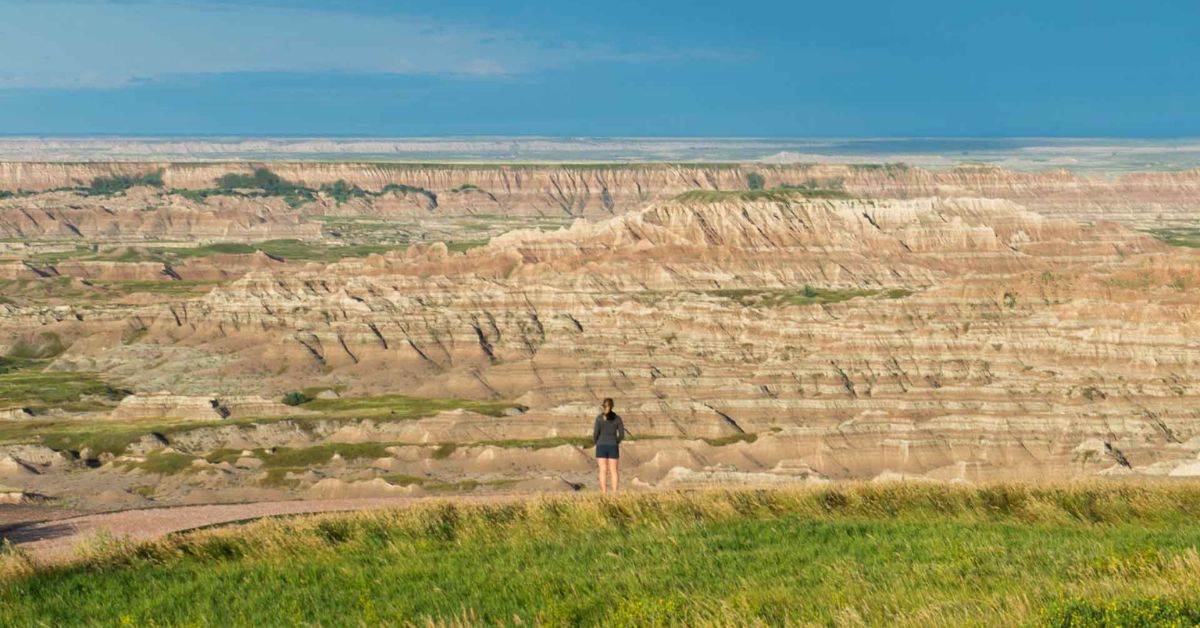
Badlands National Park southern Dakota America is one of those places that does not look real the first time you see it. Sharp ridges, striped rock layers, deep canyons, and wide open skies create a landscape that feels raw and ancient. It is not polished. It is not gentle. And that is exactly why it leaves such a strong impression.
This park sits quietly away from big cities and crowded tourist hubs. Yet it tells one of the most detailed natural stories in North America. From fossil beds that reveal millions of years of evolution to prairie grasslands still roamed by bison, the Badlands offer a rare mix of geology, wildlife, and solitude.
This guide is written for travelers who want more than surface-level facts. It is for people planning a real trip, not just skimming highlights. You will learn what makes Badlands National Park special, when to visit, what to see, how to explore responsibly, and how to plan a trip that feels unrushed and meaningful.
Where Badlands National Park Is Located?
Badlands National Park is located in southwestern South Dakota, roughly an hour east of Rapid City. The park stretches across more than 240,000 acres of protected land, much of it shaped by erosion, wind, and time.
The park sits at the edge of the Great Plains. This location explains its dramatic contrast. On one side, you have rolling prairie and open grasslands. On the other, you have jagged formations that look almost alien.
Major highways make the park accessible, but once inside, the land feels remote. That balance between accessibility and isolation is one of the park’s biggest strengths.
Why Badlands National Park Feels So Different
Many national parks are defined by forests, lakes, or mountains. Badlands National Park is defined by exposure. The land is stripped down to its bones.
A Landscape Built by Time
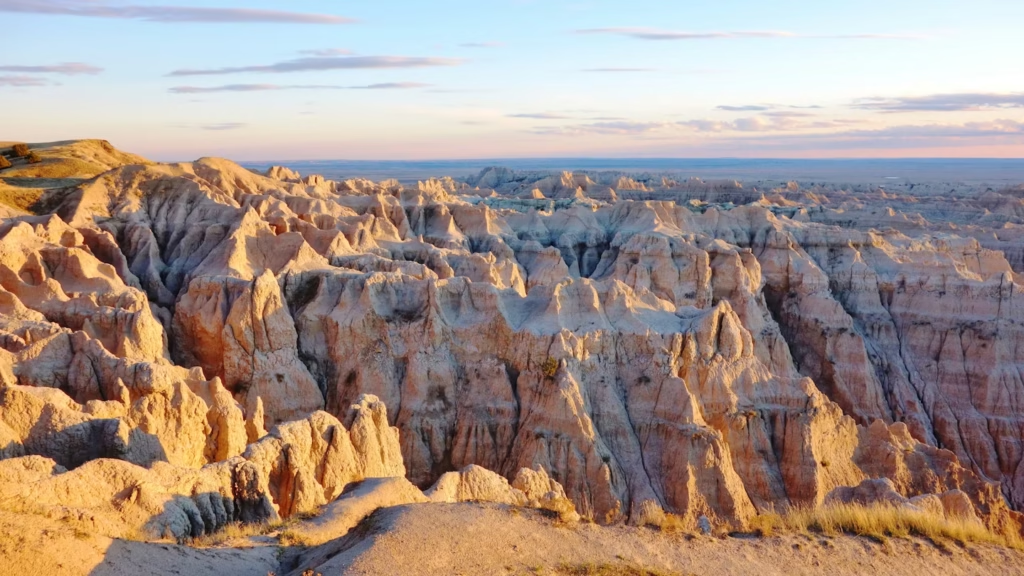
The rock formations you see today were formed over millions of years. Ancient rivers deposited layers of sediment. Volcanic ash from distant eruptions settled over the land. Wind and rain slowly carved everything away, revealing dramatic bands of color and texture.
Each ridge and canyon tells a different chapter of geological history. The yellow, red, gray, and white layers are not decorative. They are evidence.
Fossils Beneath Your Feet
Badlands National Park is one of the richest fossil areas in the world. The park protects fossils from the Oligocene Epoch, dating back roughly 23 to 34 million years. These fossils help scientists understand how mammals evolved after the age of dinosaurs.
While visitors cannot collect fossils, knowing they exist beneath the surface adds depth to every hike and viewpoint.
A Brief History of the Badlands
Long before it became a national park, this land was home to Indigenous tribes, including the Oglala Lakota Nation.
Indigenous Roots
The Lakota people referred to this area as “Mako Sica,” meaning bad land. The name reflected both the harsh terrain and the spiritual significance of the area. The land was respected, not avoided.
From Settlement to Protection
European settlers passed through the region in the 19th century, often struggling with the unforgiving environment. Farming was difficult, water was scarce, and weather extremes were common.
In 1939, the area was designated as a national monument. In 1978, it officially became Badlands National Park. Protection ensured that both the landscape and its fossil resources would be preserved for future generations.
Best Time to Visit Badlands National Park
Timing matters a lot when planning a trip to Badlands National Park. The landscape does not change much, but the experience does.
Spring (April to June)
Spring brings mild temperatures and fewer crowds. Wildflowers begin to bloom across the prairie. Wildlife activity increases, especially among bison and prairie dogs.
Weather can be unpredictable. Sudden rainstorms are possible, but they often pass quickly.
Summer (July to September)
Summer is the most popular season. Days are long, and all park roads and facilities are open. However, temperatures can climb above 100°F, especially in July and August.
Early mornings and evenings are the best times to explore during summer. Midday hiking can be uncomfortable without proper preparation.
Fall (October)
Fall offers cooler temperatures and quieter trails. The light becomes softer, which photographers appreciate. Facilities begin to reduce hours, but the park remains accessible.
Winter (November to March)
Winter transforms the Badlands into a silent, snow-dusted landscape. Visitor numbers drop significantly. Some roads may close due to snow or ice, but winter hiking and photography can be rewarding for experienced travelers.
How to Get to Badlands National Park
Most visitors arrive by car. The closest airport is in Rapid City, which offers connections to major U.S. cities.
Driving Distances
- Rapid City to Badlands National Park: about 1 hour
- Wall to the park entrance: about 10 minutes
Driving gives you flexibility, especially if you want to explore nearby attractions.
Park Entrances and Scenic Drives
Badlands National Park has several entrances, but the most commonly used is near Wall, South Dakota.
Badlands Loop Road
Badlands Loop Road is a 31-mile scenic drive that runs through the heart of the park. It connects many of the park’s best viewpoints and trailheads.
Driving this road slowly, with frequent stops, can easily take half a day. The views change constantly, and no two overlooks feel the same.
Top Viewpoints You Should Not Miss
Badlands National Park is full of overlooks, but a few stand out for first-time visitors.
Big Badlands Overlook
This is often the first viewpoint people see, and it sets the tone. The layered formations stretch out endlessly, especially striking at sunrise.
Pinnacles Overlook
Located near the western side of the park, this overlook provides a wide-angle view of the Badlands formations and surrounding prairie.
Yellow Mounds Overlook
The bright yellow and gray hills here look completely different from the rest of the park. The colors come from ancient seabed deposits.
Hiking in Badlands National Park
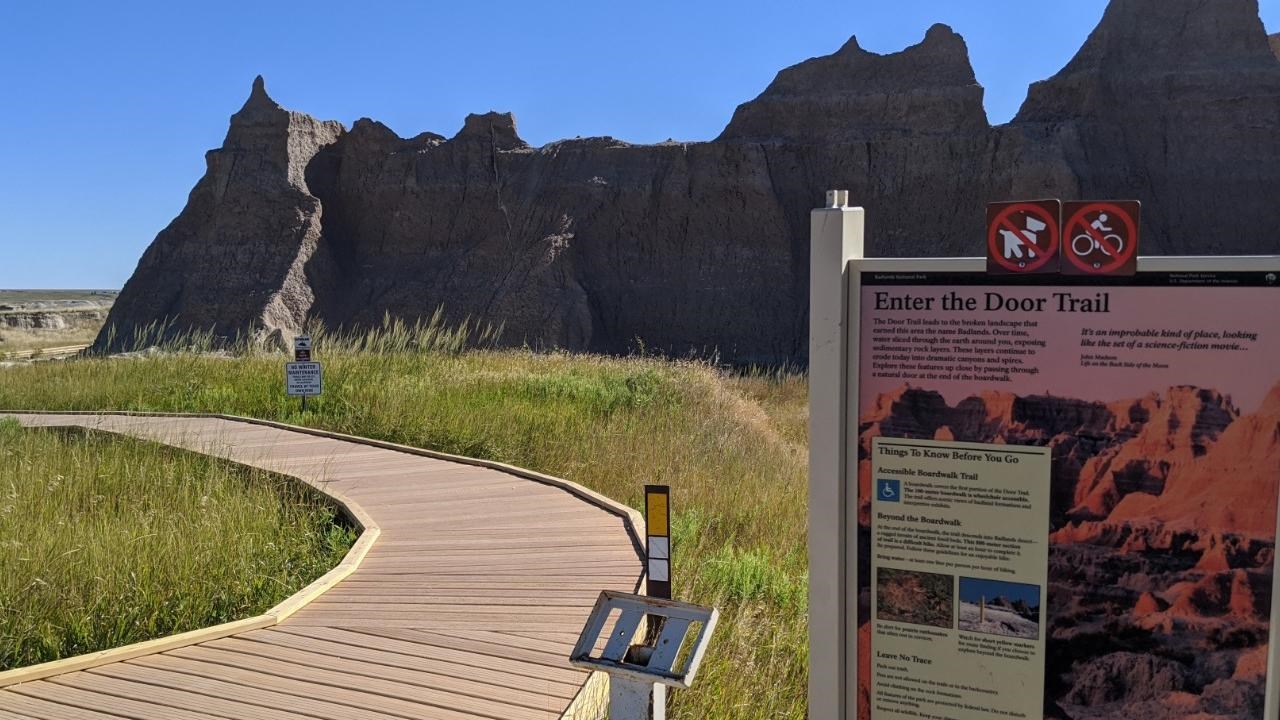
Hiking is the best way to experience the Badlands up close. Trails here are short but intense. The lack of shade and uneven terrain means preparation matters.
Door Trail
This easy trail introduces visitors to off-trail hiking. After a short boardwalk, you are free to explore marked areas of open terrain.
Window Trail
Short and accessible, this trail leads to a natural window in the rock formations with a view of the canyon below.
Notch Trail
This is one of the most popular hikes in the park. It includes a ladder climb and narrow ledges. The final view over White River Valley is worth the effort.
Castle Trail
At over 10 miles round trip, Castle Trail is the longest trail in the park. It runs along a ridge and offers wide views of the surrounding formations.
Wildlife You Can See in the Badlands
Badlands National Park protects a rare mix of sharp rock formations and open prairie grasslands. This contrast creates ideal conditions for many species. Wildlife viewing here feels natural and unscripted, with animals moving freely across large spaces rather than being confined to specific zones.
Bison
Bison roam several areas of the park and are often seen near roads and grasslands. Their size and presence are striking, especially at close range. Visitors should always keep a safe distance, as bison can move quickly and behave unpredictably, particularly during breeding season.
Prairie Dogs
Prairie dog towns are spread across the park and easy to spot. These small animals live in large colonies and communicate constantly through calls and body language. Watching their alert behavior, quick movements, and interactions offers an unexpectedly entertaining wildlife experience for all ages.
Bighorn Sheep
Bighorn sheep were successfully reintroduced to the park and are most often seen near rocky cliffs and steep terrain. Their ability to navigate narrow ledges is impressive. Early morning and late afternoon provide the best chances to spot them resting or grazing.
Other Wildlife
Beyond the well-known species, the park is home to pronghorn antelope, coyotes, rattlesnakes, porcupines, and many bird species. Hawks and falcons are commonly seen overhead. Wildlife sightings vary daily, making each visit feel slightly different and rewarding.
Stargazing in Badlands National Park
Badlands National Park is officially recognized as an International Dark Sky Park. With very little light pollution, night skies are exceptionally clear. On moonless nights, the Milky Way is visible without equipment. Seasonal ranger-led astronomy programs add helpful context and guidance.
Camping Options Inside the Park

Cedar Pass Campground
Cedar Pass Campground is the park’s primary developed campground. It offers restrooms, picnic tables, and close access to Badlands Loop Road. Its central location makes sunrise and sunset viewing easy. Sites fill quickly during peak season, so advance planning is recommended.
Backcountry Camping
Backcountry camping is available with a free permit for experienced hikers. It offers complete solitude and exceptional night skies. Campers must be self-sufficient and follow strict leave-no-trace practices. There are no facilities, so preparation and awareness of weather conditions are essential.
Where to Stay Near Badlands National Park
If camping is not appealing, small nearby towns provide simple and convenient lodging options within short driving distance of the park.
Wall, South Dakota
Wall is best known for Wall Drug, but it also offers hotels, motels, cafes, and fuel stations. Its location near the main park entrance makes it the most practical base for visiting Badlands National Park.
Interior, South Dakota
Interior is a quiet town just south of the park. Lodging options are limited but peaceful, appealing to travelers who prefer fewer crowds. Staying here allows easy access to the southern park areas and offers a slower, more local travel experience.
What to Pack for a Badlands Trip
Preparation makes a big difference here.
- Plenty of water, especially in summer
- Sun protection, including hat and sunscreen
- Sturdy hiking shoes
- Layers for changing temperatures
- Camera or binoculars
Cell service is limited in many areas, so download maps ahead of time.
Responsible Travel in Badlands National Park
Badlands National Park is fragile. The rock formations erode easily, and fossils are protected by law.
Stay on designated trails when required. Do not climb formations or remove rocks or fossils. Keep a safe distance from wildlife.
Respecting these rules ensures the park remains intact for future visitors.
Nearby Attractions Worth Adding to Your Trip
Badlands National Park pairs naturally with several nearby destinations, making it ideal for a longer road trip. These places add cultural history, forested scenery, and iconic landmarks that balance the raw, open landscapes of the Badlands.
Mount Rushmore
Located about 90 minutes from the Badlands, Mount Rushmore features massive granite carvings of four U.S. presidents. It contrasts sharply with the natural erosion of the Badlands. The site is well-organized, easy to visit in a few hours, and offers evening lighting programs.
Custer State Park
Custer State Park is known for scenic drives, mountain lakes, and large wildlife herds. Forested hills, winding roads, and roaming bison create a completely different feel from the Badlands. It is an excellent place for hiking, photography, and relaxed wildlife viewing.
Black Hills
The Black Hills region includes historic towns, pine forests, caves, and hiking trails. It adds depth to a South Dakota trip with cultural sites and outdoor activities. The landscape feels greener and cooler, providing a refreshing contrast after time spent in the Badlands.
Sample Two-Day Itinerary for Badlands National Park
This itinerary keeps driving manageable and allows time to slow down, explore viewpoints, and experience the park without feeling rushed.
Day One
Arrive early and drive Badlands Loop Road, stopping at major overlooks. Hike Door Trail and Window Trail to experience the formations up close. Spend the afternoon exploring nearby viewpoints, then watch sunset at Pinnacles Overlook for dramatic lighting.
Day Two
Hike Notch Trail in the morning before temperatures rise. Visit prairie dog towns and scenic pullouts. Spend the afternoon exploring quieter areas of the park or attending a ranger-led program. This slower pace allows the landscape to fully sink in.
Why Badlands National Park Is Worth the Trip
Badlands National Park is not flashy. It does not overwhelm with waterfalls or towering peaks. Instead, it offers something quieter and deeper.
It teaches patience. It rewards stillness. The more time you spend here, the more details you notice. Shadows shift. Colors change. Silence becomes part of the experience.
For travelers who appreciate raw landscapes, geological history, and wide open spaces, Badlands National Park delivers in a way few places can.
Must Read:
- Top Family-Friendly Destinations for Every Traveler
- Budget Travel Tips That Actually Save You Money
- Smart Family Travel Tips for Stress Free Vacations
Final Thoughts:
Badlands National Park in South Dakota is one of America’s most underrated national parks. It is accessible yet uncrowded. Dramatic yet subtle. Harsh yet beautiful.
If you approach it with realistic expectations and a willingness to slow down, it will leave a lasting impression. This is not a place you rush through. It is a place you let sink in.
Whether you come for a day or stay for a week, the Badlands have a way of staying with you long after you leave.